



Pyramids of Giza: Cairo’s Timeless Landmark
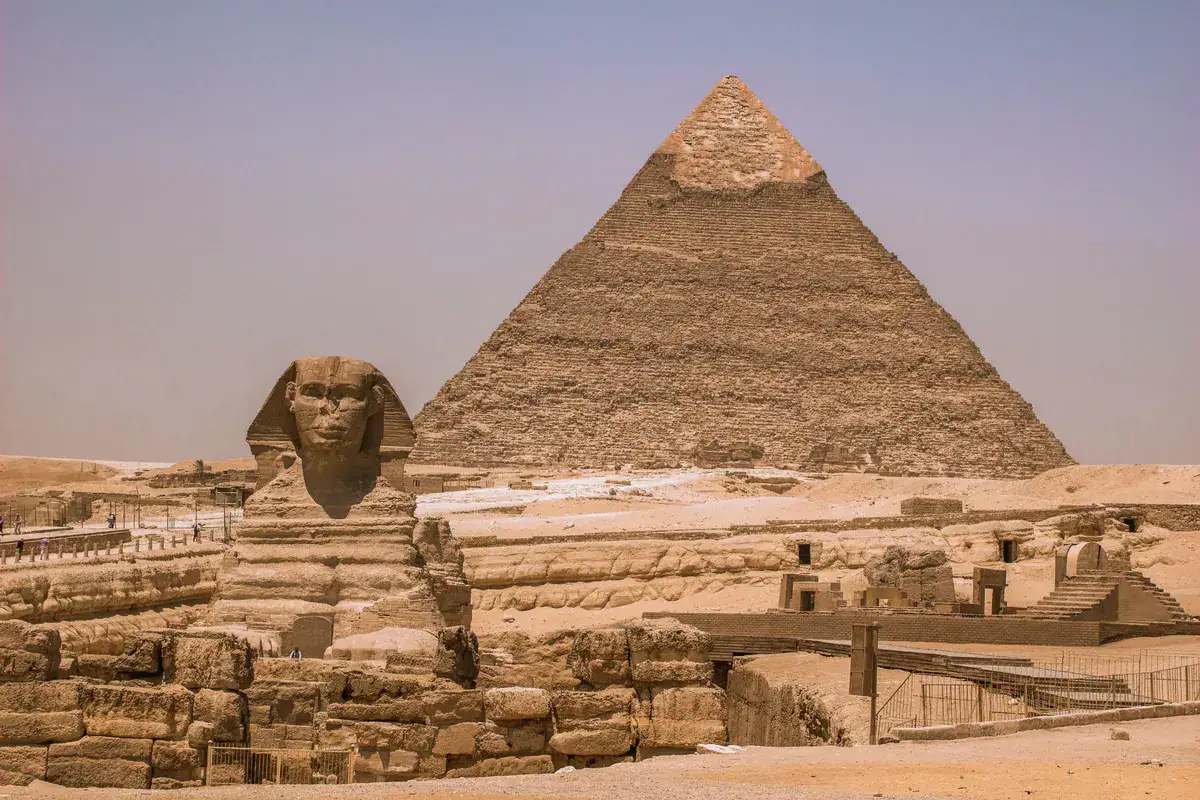
Hardly any other structure in the world captures the imagination quite like the Pyramids of Giza. Located right on the outskirts of Cairo, these massive tombs have towered into the sky for over 4,500 years and are still considered the last surviving of the Seven Wonders of the Ancient World. No visit to Cairo is complete without seeing this highlight—the Pyramids of Giza are the starting point of every trip to Egypt and the quintessential symbol of the fascination with Ancient Egypt.
In this article, you’ll learn everything you need to know about the Pyramids of Giza: their history, the individual structures, hours of operation and admission prices, the best way to get there from Cairo, and practical tips for a successful visit.
The Pyramids of Giza at a Glance
The Giza Plateau is located about 15 to 20 kilometers southwest of downtown Cairo, right on the edge of the Sahara. Here stand three great pyramids —the Pyramid of Khufu, the Pyramid of Khafre, and the Pyramid of Menkaure—along with several smaller subsidiary pyramids, numerous burial chambers, and the world-famous Great Sphinx. Since 1979, the Giza Necropolis, together with the area surrounding the Sphinx, has been a UNESCO World Heritage Site.
The Pyramids of Giza were built during the 4th Dynasty of the Old Kingdom, roughly between 2600 and 2500 B.C. They served as monumental tombs for the pharaohs and reflect the beliefs of that time regarding the afterlife. To this day, archaeologists and engineers are still puzzling over how Bronze Age people managed to cut and stack stone blocks weighing several metric tons with such precision.
The pyramids of Giza were preceded by centuries of development in Egyptian funerary architecture. Initially, simple, rectangular mud-brick structures—known as mastabas—served as the kings’ final resting places. It was not until the Step Pyramid of Saqqara, built for Pharaoh Djoser, that the first true pyramid shape emerged. The master builders of Giza ultimately perfected this concept into the smooth, four-sided pyramid as we know it today. The construction of the Pyramid of Cheops alone is estimated to have required the labor of tens of thousands of workers over several decades—organized through a highly sophisticated system of logistics, food supply, and seasonal division of labor that was long underestimated.
The connection between Cleopatra and the Pyramids of Giza is also interesting: The famous queen lived closer in time to our own era than to the construction of the pyramids—there are about 2,500 years between her reign and the construction of the Pyramid of Khufu. This enormous span of time highlights just how ancient the history of the Pyramids of Giza truly is.
The Pyramid of Cheops: The Largest Pyramid in Egypt
The Pyramid of Cheops, also known as the “Great Pyramid,” is the largest and oldest of the three main structures at Giza, originally standing 146.6 meters tall. It was built for Pharaoh Cheops (Khufu) and consists of approximately 2.3 million stone blocks. For millennia, it was the tallest man-made structure in the world—a record that was not broken until the Middle Ages.
For an additional fee, visitors can enter the interior of the Pyramid of Cheops and make their way through narrow, ascending passageways to the burial chamber. Anyone who decides to take the interior tour should allow plenty of time and be in good physical condition, as the passageways are low and, in some places, steep. The number of interior tickets sold each day is limited, so it’s worth booking early.
The Pyramid of Khafre and the Pyramid of Menkaure
The Pyramid of Khafre stands right next to the Pyramid of Khufu. Because it is situated on slightly higher ground, it actually appears larger at first glance, even though it was originally somewhat shorter, at around 143 meters. At its summit, a remnant of the original smooth limestone casing has survived to this day—a rare glimpse of what all three pyramids must have looked like in the past.
The third in the group, the Pyramid of Mykerinos, is significantly smaller than its two neighbors, but no less significant. It marks the transition to a new era of construction, in which the Egyptians began to erect smaller but more elaborately designed tomb complexes. Surrounding the three main pyramids are also several smaller queens’ pyramids, as well as the famous solar barges, which were once intended to serve as a means of transportation for the pharaoh in the afterlife.
The Great Sphinx of Giza
No visit to the Pyramids of Giza is complete without seeing the Great Sphinx. Carved from solid rock, this figure with the body of a lion and the head of a human is considered one of Egypt’s most enigmatic monuments. Exactly who the Sphinx represents and when it was built remain unclear to this day—the most common theory attributes it to Pharaoh Khafre.
The Sphinx is located directly east of the Pyramid of Khafre and, together with the adjacent Valley Temple, is one of the most photographed sites in Egypt. The most impressive photos are taken here, especially in the early morning, when the light falls golden across the plateau.
Hours and Admission Prices
The Giza Plateau is generally open daily from about 8:00 a.m. to 5:00 p.m., with extended hours into the evening during the summer. A regular admission ticket to the plateau grants access to the area surrounding the three pyramids and the Sphinx. A separate ticket is required to enter the interior of the Pyramid of Khufu and to visit the Solar Boat museums.
Since prices and hours of operation are subject to change, it is advisable to obtain up-to-date information directly from a reputable travel agency or the official ticket office on site before your trip. If you book your visit as part of a guided tour, you generally do not need to arrange tickets or admission yourself.
Getting There: From Cairo to the Pyramids of Giza
The Pyramids of Giza are located only about 30 to 45 minutes from downtown Cairo, depending on traffic and your starting point in the city. Most visitors get there by taxi, Uber, or as part of an organized day tour, which often includes other stops such as the Egyptian Museum or the Khan el-Khalili Bazaar.
For international travelers, Cairo International Airport (CAI) is the standard point of arrival; from there, it takes about 45 to 60 minutes to reach the Giza Plateau, depending on traffic conditions. A guided tour with a German-speaking guide is particularly recommended for first-time visitors, as it not only takes care of transportation but also provides historical context, insider tips, and a smooth experience without waiting in line at the ticket counters.
Best Time to Visit and Practical Tips
The best time to visit the Pyramids of Giza is between October and April, when temperatures are milder than during the height of the Egyptian summer. If you want to experience the pyramids without large crowds, you should arrive as early as possible in the morning, shortly after they open, or alternatively choose the late afternoon, when the day-trippers have already left.
Some practical tips for your visit:
- Bring sunscreen: There is hardly any shade on the plateau, so a hat, sunscreen, and plenty of water are essential.
- Wear sturdy shoes: The ground is sandy and uneven, especially around the Sphinx and the minor pyramids.
- Camel ride or horse-drawn carriage: Popular but optional additional experiences that are negotiated directly on site—be sure to agree on prices clearly in advance.
- Photography: The best view of all three pyramids together is from the so-called “Panorama Point” on the southern edge of the plateau.
- Evening Light and Sound Show: If you stay, you can experience the pyramids illuminated by a changing display of lights during the evening show—an atmospheric way to end the day.
Other nearby Cairo attractions
A visit to the Pyramids of Giza can be easily combined with other Cairo attractions. Just a few minutes from the plateau lies the new Grand Egyptian Museum, which houses the world’s largest collection of ancient Egyptian artifacts, including treasures from Tutankhamun’s tomb on full display for the first time. The historic Egyptian Museum on Tahrir Square in central Cairo, the Citadel of Saladin, and the historic Khan el-Khalili Bazaar can also be easily incorporated into a multi-day stay in Cairo.
For travelers who would like to visit not only the Pyramids of Giza but also the famous Step Pyramid of Saqqara or the Pyramids of Dahshur, extended day trips are a great option, as they combine visits to several Old Kingdom necropolises in a single day.
Frequently Asked Questions About the Pyramids of Giza
How far are the Pyramids of Giza from Cairo?
The Giza Plateau is located about 15 to 20 kilometers from downtown Cairo, which is a drive of about 30 to 45 minutes.
Can you tour the Pyramids of Giza from the inside?
Yes, you can tour the interior of the Pyramid of Cheops with a separate ticket. The number of tickets available each day is limited, so early reservation is recommended.
How much time should you set aside for a visit to the Pyramids of Giza?
For a leisurely visit that includes the Sphinx and the panoramic viewpoint, you should plan on spending at least two to three hours. If you also want to tour the interior or visit the nearby Grand Egyptian Museum, it’s best to set aside half a day to a full day.
Is it possible to visit the Pyramids of Giza without a guided tour?
In principle, yes, but a guided tour with a German-speaking guide makes the experience much smoother, since transportation, tickets, and historical context are all organized by a single provider.
Conclusion
The Pyramids of Giza are far more than just a photo opportunity—they offer a direct window into a civilization dating back over 4,500 years and are the emotional highlight of any trip to Egypt. Whether as a day trip from Cairo or as part of a more extensive tour, a visit to the Pyramids of Giza—combined with the Great Sphinx and the new Grand Egyptian Museum—is one of the most unforgettable experiences Egypt has to offer.
Experience the Pyramids of Giza with Adam Travel
Would you like to do more than just visit the Pyramids of Giza—would you like to truly experience them—with a German-speaking tour guide, seamless organization, and no waiting in line at the ticket office? Discover our cultural tours of Egypt and let us tailor your dream trip to the banks of the Nile just for you—from your arrival to your Nile cruise, all from a single source.