



Alexandria: The City You Can Read Like a Book
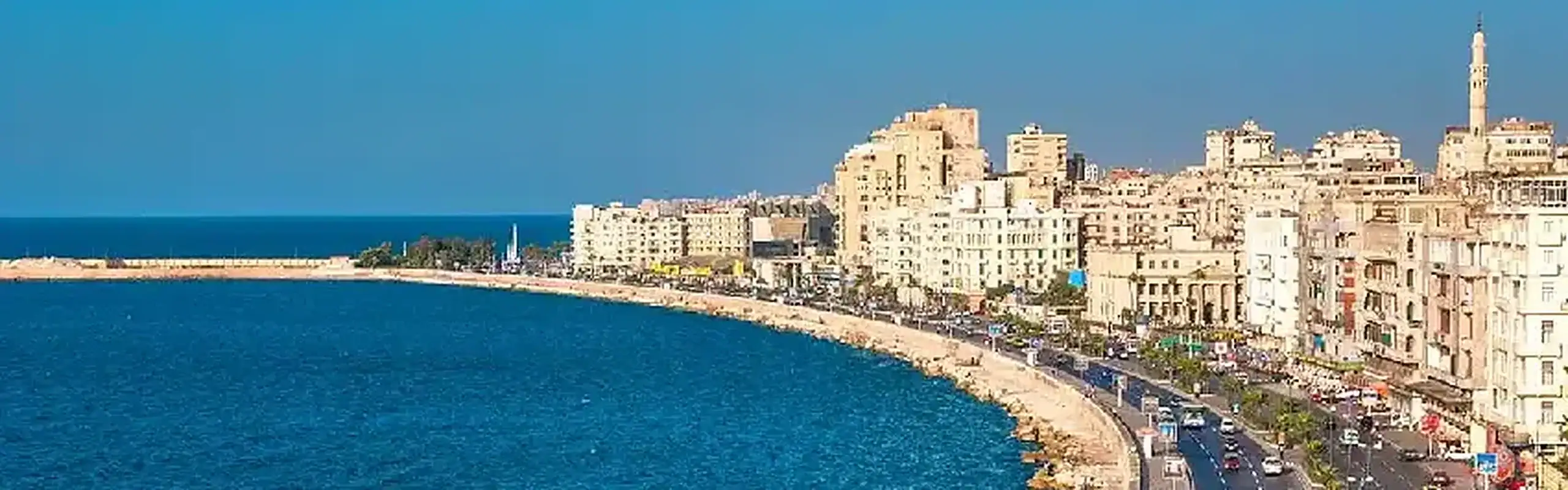
There are cities you visit, and there are cities you read about. Alexandria belongs to the second category. For over 2,300 years, Greeks, Romans, Arabs, Ottomans, Italians, and Egyptians have been writing its history. Each era has added a new chapter without completely erasing the old one. Beneath a bustling street lies a Roman villa; beneath a fortress, one of the Seven Wonders of the World; and beneath the waves of the harbor, a sunken palace.
No wonder that, of all places, the world’s most famous library once stood here. The city of Alexandria itself is a library, built of stone, saltwater, and memory. In this travel guide, we’ll flip through its chapters together, from its vibrant present all the way down to the seabed. Flip through the pages with us, and let Alexandria captivate you.
Foreword: Where Is Alexandria?
Alexandria is located on the Mediterranean coast in the northwest of the Nile Delta, about 220 kilometers from Cairo. With a population of over five million, it is Egypt’s second-largest city and the country’s most important port. From Cairo, you can reach the city in about three hours by car or in about two and a half hours by train.
Many travelers combine a visit to Alexandria with a tour of Cairo and the Nile Valley. But the city is also worth a visit on its own, especially for anyone who loves the sea. Alexandria feels different from the rest of the country: cooler, more breezy, more European. The people here affectionately call their city “the Bride of the Mediterranean,” and after a few days, you’ll understand why.
Chapter 1: Alexandria Today—Life on the Corniche
Let’s start with the top page, the present.
The Corniche
If you want to get a sense of what life is like in Alexandria today, take a stroll along the Corniche. The waterfront promenade stretches about 20 kilometers in a wide arc along the sea. In the morning, fishermen sit on the breakwaters with long rods; in the evening, families and couples stroll in the salty breeze, and street vendors sell roasted corn and freshly squeezed juices.
Stanley Bridge and Montaza Palace
One of Alexandria’s landmarks today is the Stanley Bridge, whose towers are particularly impressive at sunset. Further east, the sprawling gardens of the Montaza Palace—once the summer residence of the Egyptian royal family—open up. Amid palm trees, pine trees, and small beaches, you’ll find one of the quietest spots in the city here.
Coffeehouses and Kavafis
In the city center, the historic coffeehouses evoke the cosmopolitan Alexandria of the early 20th century, when Greeks, Italians, Armenians, and Egyptians lived side by side. Take a seat at a marble table, order a coffee and a pastry, and watch the city go by. Literature lovers can also visit the small museum dedicated to the Greek poet Konstantinos Kavafis, who wrote the verses here that made Alexandria immortal.
Chapter 2: The Lighthouse and the Qaitbay Citadel
Let’s turn back a page, to the Middle Ages and even further back.
The Qaitbay Citadel
At the entrance to the East Harbor stands the Qaitbay Citadel, a light-colored limestone fortress built by Sultan Qaitbay in the 15th century. But the real secret lies beneath its walls: this is exactly where the Lighthouse of Alexandria, one of the Seven Wonders of the Ancient World, once stood.
The Lighthouse of Alexandria
The Pharos was built in the 3rd century B.C. under the Ptolemies and was probably over 100 meters tall. Its beacon guided ships for centuries until earthquakes caused it to collapse in the Middle Ages. Stones from the old lighthouse were reused in the construction of the citadel. So when you walk through the fortress today, you may be touching the remains of one of the Seven Wonders of the World.
View and the Abu el-Abbas Mosque
From the walls, you can gaze out over the Mediterranean and back toward the city skyline—one of the most beautiful viewpoints in Alexandria. Right nearby is the elegant Abu el-Abbas Mosque with its delicate minarets, the spiritual heart of the harbor district.
Chapter 3: Bibliotheca Alexandrina—The New Library of Alexandria
No chapter is as important to this city as this one.
The Ancient Library
In ancient times, the Ptolemies collected all the knowledge of the known world in their library. Ships docking at the harbor were required to hand over their scrolls to be copied. Scholars such as Euclid worked here, and Eratosthenes calculated the circumference of the Earth with astonishing precision. The fate of the ancient library remains a mystery to this day, but its legend has endured.
The Rebirth, 2002
In 2002, this myth was reborn. The Bibliotheca Alexandrina is one of Egypt’s most spectacular structures: a massive disc sloping toward the sea that resembles a rising sun. Its exterior wall, made of granite from Aswan, bears characters from alphabets around the world. Inside, light streams into a reading room that is arranged in tiers across several terraces and is among the largest in the world.
More Than Just a Library
The new Library of Alexandria is much more than just a place for books. It houses a museum of antiquities, a manuscript museum, a planetarium, and rotating exhibitions. Set aside at least two hours for the Bibliotheca Alexandrina.
Our tip: A guided tour is well worth it to understand the symbolism of the architecture.
Chapter 4: Rome Beneath the Ground
Now let’s delve deeper into the Roman period. Some of Alexandria’s most fascinating sights lie beneath the surface.
Catacombs of Kom el-Shukafa
In the Catacombs of Kom el-Shukafa, a spiral staircase leads down to an underground burial complex dating from the 2nd century A.D. What makes it unique is that Egyptian gods are depicted here wearing Roman armor, and Greek columns stand alongside Pharaonic symbols. Nowhere else in the city of Alexandria is the blend of cultures as palpable as it is here.
Pompey’s Column
Nearby, the Column of Pompey soars into the sky—a column about 27 meters high, carved from a single block of pink granite from Aswan. Despite its name, it was erected in honor of Emperor Diocletian. It once stood in the Serapeum, the city’s great sanctuary, which also housed a branch library.
Roman Theater of Kom el-Dikka
In the Kom el-Dikka neighborhood stands the Roman Theater, the only one of its kind in Egypt. The semicircular marble seats are exceptionally well-preserved. Nearby are the remains of Roman baths and the “Villa of the Birds,” featuring colorful mosaics.
Chapter 5: The Sunken City
The final chapter lies underwater. In Alexandria’s East Harbor lie the remains of the Ptolemaic royal quarter, including structures dating back to Cleopatra’s time. Since the 1990s, underwater archaeologists have discovered statues, sphinxes, and columns here. Some of these finds are now on display at the National Museum and the reopened Greco-Roman Museum, which are among the most fascinating sights in Alexandria, Egypt, for history lovers.
Alexandria Tips: Weather, Food, and Getting Around
Best Time to Visit
Alexandria has a mild Mediterranean climate. The best months to visit are April through June, as well as September and October, when temperatures range from a pleasant 25 to 30 °C. In the summer, the city is a popular vacation destination for Egyptians and is accordingly bustling. In winter, it gets cooler, with daytime temperatures around 18 °C, and there can be rain and storms, which lend the sea a unique sense of drama.
Food
In Alexandria, you should definitely try the fish and seafood. In many restaurants, you can choose the catch of the day yourself, and it’s served grilled or fried, accompanied by rice, salads, and fresh bread. The more adventurous should try “Kebda Iskandarani,” the city’s signature spicy liver dish, which is available at every food stall.
On the Go
The historic tram, one of the oldest in Africa, is a charming way to explore the city. Taxis are convenient for longer trips along the Corniche. Agree on the fare in advance.
Clothing
Light clothing is usually sufficient, but because of the wind by the sea, a light jacket is recommended for the evening. In mosques, shoulders and knees must be covered.
Alexandria in 3 Days: Our Suggested Itinerary
Day 1: Arrival and the Sea of Alexandria
You’ll arrive from Cairo in the morning and reach Alexandria around noon. After checking in, head to the Qaitbay Citadel and explore the site where the lighthouse once stood. Then take a stroll to the Abu el-Abbas Mosque and on to the fish market at the harbor. At sunset, you’ll stroll along the Corniche, and for dinner, you’ll enjoy freshly grilled fish while taking in the view of Alexandria’s lights.
Day 2: The Chapters of History
The second day takes you through the city’s layers. In the morning, you’ll descend into the Catacombs of Kom el-Shukafa and visit the Pompey’s Pillar. Next, you’ll explore the Roman Theater of Kom el-Dikka with its mosaics. After lunch, you’ll spend the afternoon at the Bibliotheca Alexandrina, the modern heart of Alexandria. You’ll round out the evening at one of the historic coffeehouses.
Day 3: Palaces, Gardens, and Farewells
On the last day, Alexandria shows its more relaxed side. In the morning, you’ll visit the National Museum or the Greco-Roman Museum before continuing on to the gardens of the Montaza Palace. Surrounded by palm trees and small coves, you’ll enjoy the tranquility of the Mediterranean. In the afternoon, you’ll return to Cairo, or you can extend your stay in Alexandria with an excursion.
Optional Day 4: Rosetta or El Alamein
If you have more time, you can take two exciting day trips from Alexandria. About an hour’s drive east lies Rosetta, where the famous stone was found in 1799, leading to the decipherment of hieroglyphs. About 100 kilometers to the west, the memorials at El Alamein commemorate one of the decisive battles of World War II.
Alexandria on Your Trip to Egypt
Alexandria is the perfect addition to a classic tour. After visiting the Pyramids of Giza and the Grand Egyptian Museum, the city offers a welcome breath of sea air before you continue south to Luxor and Aswan. With Adam Travel, you can incorporate Alexandria into any itinerary—whether as a day trip from Cairo or a multi-day stay—at your own pace.
Frequently Asked Questions About Alexandria
What sights in Alexandria, Egypt, should you not miss?
The Bibliotheca Alexandrina, the Qaitbay Citadel, the Catacombs of Kom el-Shukafa, the Pompey’s Pillar, the Roman Theater, and the Corniche are must-see attractions on any visit.
Is a day trip from Cairo enough?
One long day is enough to see Alexandria’s main attractions. If you really want to enjoy the city, you should plan on spending two to three days there.
When is the best time to visit Alexandria?
Spring and fall are ideal. Summer is warm and lively, while winter is cooler and sometimes rainy.
Can you go swimming in Alexandria?
Yes, in the summer. The most beautiful beaches are located a little outside the city, such as around the Montaza Palace or further west along the north coast.
Your chapter in Alexandria begins here
Alexandria is a city whose story is never quite finished. Every visit adds a new chapter: a sunset on the Corniche, a glimpse into the library’s reading room, a step down into the catacombs. Let’s write your personal chapter together. At Adam Travel, we’ll plan your trip to Alexandria, Egypt, exactly according to your wishes, with personalized advice from Switzerland. Contact us for a no-obligation quote—the Mediterranean is already waiting.